My name is Loran G. Glasco Jr. I was born June 7, 1972, in Elgin, Illinois. I'm a medically retired disabled veteran, a father, a brother, a grandson, and a son. This is the story of where I come from and where I'm going.
WHERE THE NAME COMES FROM
My family name is Glasco. But it started as McGlasgow — from Glasgow, Scotland. Glasgow is one of the oldest cities in Scotland, founded in the 6th century. The name comes from the Brittonic "Glasgu" — meaning "green hollow" or "dear green place."
"Mc" means "son of" in Gaelic. So McGlasgow literally means "son of Glasgow." Some branches of the family kept the McGlasgow spelling. Others shortened it to Glasco. Mine is the Glasco line.
My sister Leeanna showed the Indian in her — the Cherokee from our grandmother Ruby Masterson Glasco. I showed the Scottish in me — the McGlasgow, the Dunbar, the blood from Glasgow and Crawford.
We had the same parents. The same blood. But different faces. And different names under the same roof. The family carries all of it.
ELGIN, ILLINOIS — 1972-1981
I was born June 7, 1972, in Elgin, Illinois. My dad worked at Alumax, running a hydraulic press that made aluminum tubing for cable TV. My mom was from West Helena, Arkansas — she'd moved to Elgin with her dad, Coy Coker, after her parents split.
My parents met at Elgin High School. My mom used to tell her friends: "I'm going to marry him one day." Every time my dad got into a fight — and he got into a few — he either knocked the guy down the stairs or knocked him out cold. And every time, the guy landed at her feet. She took it as a sign.
They married on December 7, 1971 — Pearl Harbor Day. My mom told him to pick the date. He picked a day he could never forget. But it was also the day my mom's dad, Coy, had married her stepmom, Ruby Coker. Two generations, married on the same day.
I was born six months later.
THE BOMB — 1981
In 1981, when I was 8 years old, a bomb went off at 1 AM in our Elgin neighborhood. A truck owner — who ran a construction company — had fired a guy. The guy put a bomb in the truck to kill him. It was set to go off exactly when the neighborhood kids walked past on their way to school.
It went off prematurely. At 1 AM. Hours before anyone walked by.
The next morning, my mom walked the kids to school like always. Police stopped her: "Do the kids always walk this way?" She said yes. They told her to come back after she dropped them off.
When she did, they told her: "That bomb was meant to go off at this exact time. You all walk here within a minute or two of each other every day."
My mom went home and called my dad. "I'm taking the kids to Arkansas for good."
He said: "Give me 24 hours."
He came home and asked: "How about we move to NC instead?" Alumax wanted him to follow the press, set it up, and keep doing the maintenance.
She agreed. In March 1981, we moved to North Carolina.
And after that — we got to cut through the park. The school changed the rules. We played in the park on the way home. That's the part I remember most.
RUBY MASTERSON GLASCO (1926-1996)
My grandmother Ruby was full-blood Western Cherokee. She married my grandfather Alex Glasco, and they raised five children in Craighead County, Arkansas. She's buried at Pine Log Cemetery in Brookland.
She was hard to fool. When I was a kid, my cousin David shot me in the butt with a BB gun in the pasture behind my uncle's house. I ran to grandma's, rubbing my butt. She and my mom asked what happened. I said: "David shot me in the butt." They both said: "No he didn't."
I dropped my pants and showed them the welt. A wallet in my back pocket took most of the hit. They believed me then.
She was also the one who saved my life. In 1984, in Jonesboro, I ate a six-pack of Snickers bars and woke up with a belly ache. I went fishing anyway — the boat broke down and my cousin and I swam it back. By the time I got to grandma's, I was still hurting.
Mom and my Aunt Vickie said "take a warm bath." Grandma said: "Cat, you need to call Loran. Tell him you're taking ELGGY to the hospital. This is something else."
She was right. My appendix was about to rupture. My dad — 12 to 14 hours from home — told the doctor to operate. They did. I survived.
That's the moment ELGGY stopped being just a nickname. Ruby used it when it mattered.
I remember visiting her in Arkansas when I was a kid. All the grandkids would be outside playing in the yard, and she'd yell out the door: "You boys better stop playing so rough with the girls right now."
That's her. That's Ruby.
ALEX GLASCO (1926-1972)
I never knew my grandfather. He died in November 1972, five months after I was born. But the story of how he died has stayed with the family for over fifty years.
He was deer hunting in the Arkansas woods — near where I live now — when he had a massive heart attack. He walked out of the woods, found a house, and the man who answered knew immediately what was happening. He loaded Alex into his truck and drove him to the hospital in Salem, Arkansas.
Alex didn't make it. But before he went into those woods, he knew. The family says he'd been quiet, drinking, and he bought coats for the kids. He told the mothers: "Take care of my sons, and your kids, raise them right." Those were his last words to them.
He was 46 years old. He left behind Ruby and five children. My father was 21. And I was five months old.
THE GLASCO PATTERN
Before my father, no male Glasco in the recorded line lived past 46. They died of heart attacks or in wars. One generation after another, cut short.
My grandfather Alex Glasco died at 46. His father before him didn't make it either. The line kept losing its men young.
My father, Loran Gene Glasco Sr., broke the pattern. He turns 75 this year. I'm 53. We're the first Glasco men in generations to have time.
The line carries a lot. I'm trying to carry less of it.
SERVICE — 1990-1998
I enlisted as a senior in high school, 1990-1991. Basic Training: June 19 to mid-September 1991.
Charlie Battery, 1/113th Field Artillery — North Carolina National Guard, 1991-1994. I was promotable to E-5 in May 1992, but the training NCO stalled my paperwork before I went active.
November 1994 — I went active duty. Charlie Battery, 2/82 FA, 3rd Brigade, 1st Cavalry Division — the Steel Dragons. My MOS: 13B Cannoneer.
I was the Unit Armorer. I knew the serial number to every weapon we had — all 120 M16s, all 6 .50 cals, 6 M60 machine guns, and every NVG in that arms room. All from memory.
One time the DoD came down to inspect. They came to my arms room and asked why. They said the MP station heard I had the best in the Division. They loved it. They asked where my paperwork was. I said: "Right here on a 3.5 disk." I'd created every piece in Excel myself. They took a copy with them. I never got credit for it.
Perfect matches on the paperwork.
September 19 – December 1996 — deployed to Kuwait. Saddam Hussein was massing on the 29th Parallel. 3rd Brigade was on duty.
RUBY'S DEATH IN KUWAIT — SEPTEMBER 1996
We'd been in the field for a month — four weeks longer than planned. Someone lost NVGs. Then, at 1 AM, they knocked on the barracks doors. Alert. Deployment.
The CQ NCO came to me: "SPC Glasco, commander needs you in his office right now."
The commander asked how long to pack the arms room. I said 8 to 12 hours. He said: "You have 4 to 6." I said: "Sure thing."
Later that day, he told me: my grandma had passed away.
My arms room LT offered to drive me home and back. Command said no. I was deploying.
I hit the ground in Kuwait, out in the desert near the 29th Parallel. A few days in, the CPT called me over: "Glasco, your grandma passed away."
I said: "I know, sir."
Everyone looked at me. "How?"
I said: "I just know she passed last night at this hour." And I was right. Right on the money.
Both of them told me. Ruby and Alex. My grandpa — who died when I was five months old, who I never met — came with her to tell me.
I called home. My dad said he loved me — something he never says. I hung up. I said to my platoon: "My dad just said something I never heard him say before."
They asked what. I said: "He said he loved me. Can I call back to make sure I heard him right?"
After everyone else made their calls, I got to call back. "Dad, did I hear you right? You said you loved me?"
He said: "Yes Loran, you did hear me right."
Ruby made him promise to tell us kids and our mom he loved us more often. He'd broken that promise for years. That night — the night she died — he kept it.
THE WRECK — FEBRUARY 8, 1998
On February 8, 1998, I was in my 1996 Firebird near Mexia, Texas. My ex-girlfriend was driving. We'd broken up that morning. I was taking her and her three kids home.
The car went airborne for 180 feet, then rolled end-over-end 4 to 5 times.
The woman and her niece were ejected. I was ejected through the passenger side window. Her six-year-old son was pinned under the passenger seat — and he held onto his two-year-old sister the entire time. Neither of them was hurt. Neither was their mom.
The niece suffered head trauma and a broken leg. The leg was set wrong. She recovered, but I don't know what happened after that.
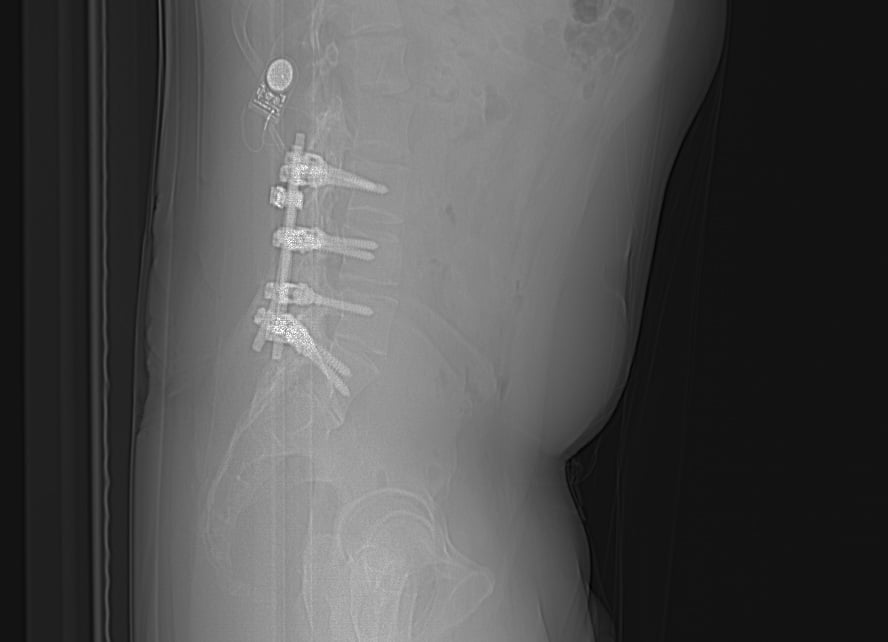
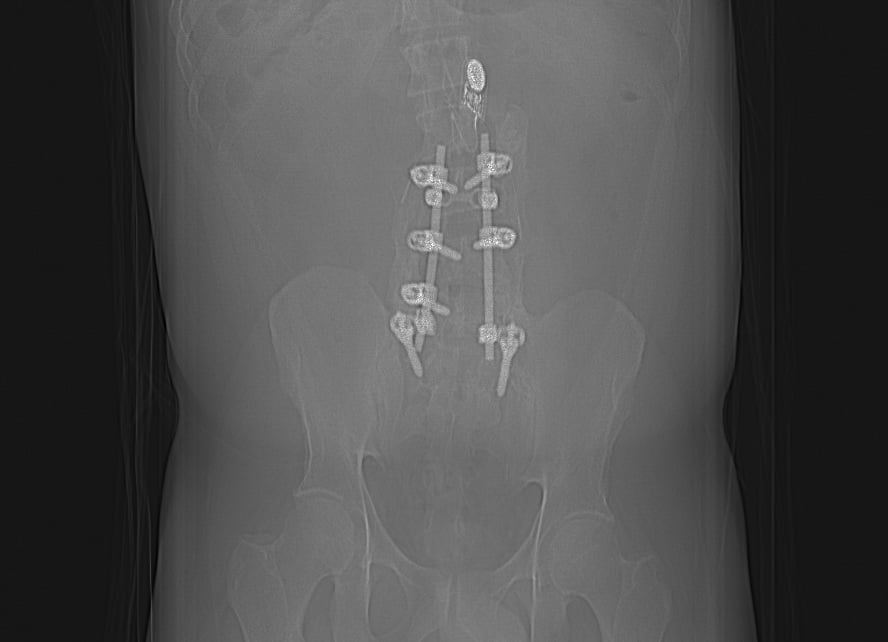
Me: both lungs collapsed. Several ribs broken. Spleen ruptured. Left arm broken at the shoulder joint. Left foot turned 180 degrees the wrong way. L3 chipped. L4 fractured. L5 blown. Major head trauma — bleeders on the front lobe, dead center, and the memory area of the brain.
The doctor at the first hospital in Mexia said: "Bag and tag him. He won't make it." He didn't bag me — but he slipped the toe tag on my foot.
The life flight from Waco Baptist got me loaded up. I flatlined when we got up. They worked the entire flight to bring me back. I was told they lost me many times.
We landed in Waco. Emergency surgery for my spleen. Then a medically induced coma.
THE COMA
While I was in the coma, my mom played music for me. Certain music would make me violently restless. I was strapped down because of the back injury. My sister went to the car to get her CDs and put on Stabbing Westward. I calmed down instantly. From then on, they played Stabbing Westward whenever I got restless.
When they repaired my back, they had to fix the nerve sack. I ripped it open — nerves were exposed.
When they decided to wake me — after the brain swelling went down — my dad told them: "Strap his hands down. Don't just wake him up." The nurses asked why. He said: "When he had his appendix out, they gave him meds to wake up and he started swinging."
They didn't listen. I hit one male nurse twice, both times in the face. I popped a female nurse once. The male nurse came back and said: "Loran, raise your fist up and leave them." I did it — still out cold. He taped towels to my hands.
A nurse from Jonesboro — who went to school with my dad — was there. She said: "Loran, lay back down and go to sleep." And I did.
HELL
When I woke up completely, I saw my dad. "Are you sure? I just got back from hell."
He laughed. I said: "No dad, I have been to hell."
Two loud booming voices arguing over me. God and the Devil. It felt like a long time.
God won. Said I was never Satan's to claim. Said if he claimed me again, I was allowed to raise all kinds of hell in his domain. Satan let me go.
I saw bright lights. Someone stopped me — pointed to another light, shook their head. I went to the other light.
God said: "Go back, my son. You haven't done what you are meant to do yet. Your mission — your job — is not done. Go back to earth."
I saw people — especially me — walking out of my skin. Just skeleton, running around, then back into the skin. Or the skin doing the same thing.
I told my dad: "I was ripped open. Trees shoved up me. Splitting me in half."
MAY 1, 1998
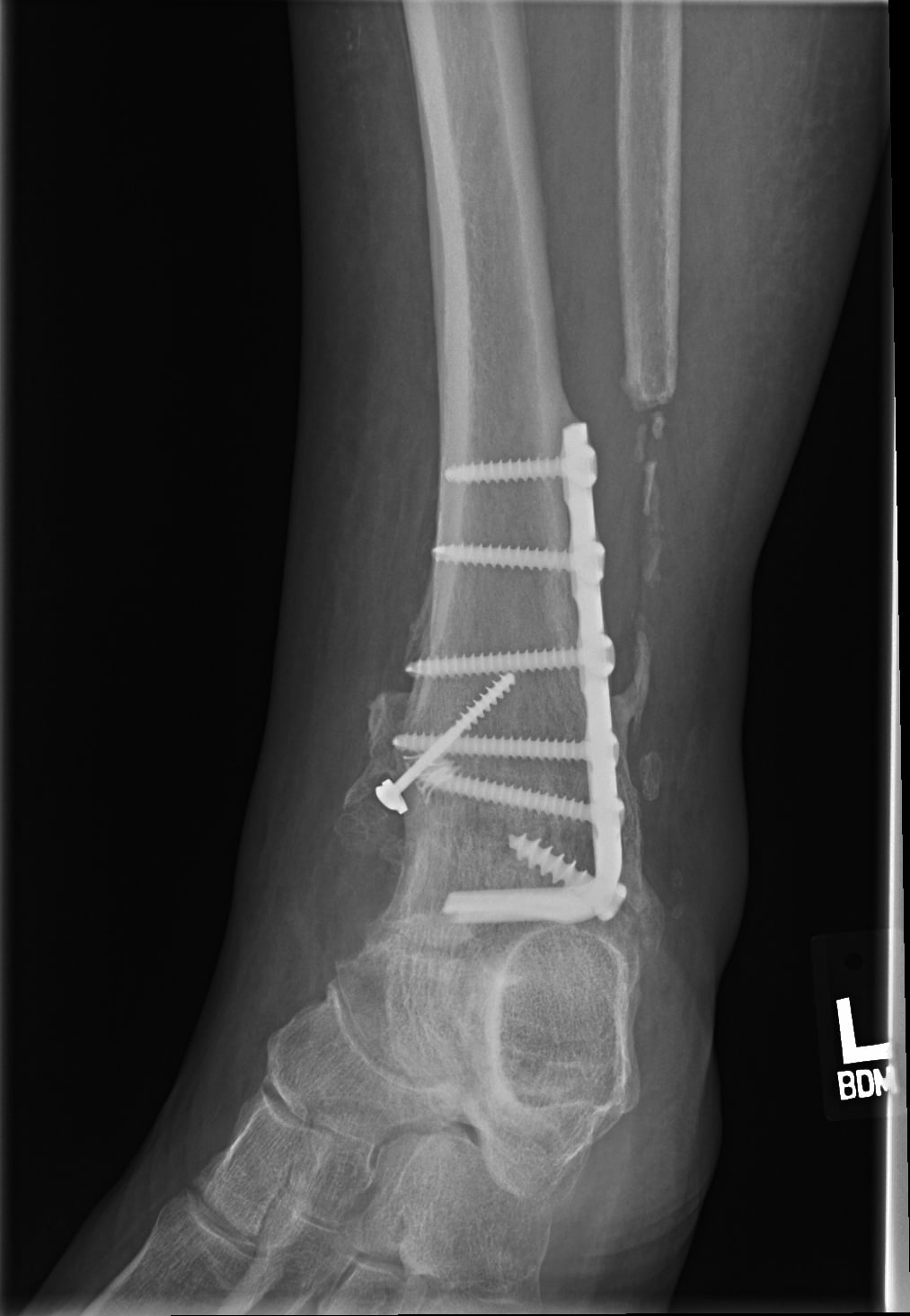
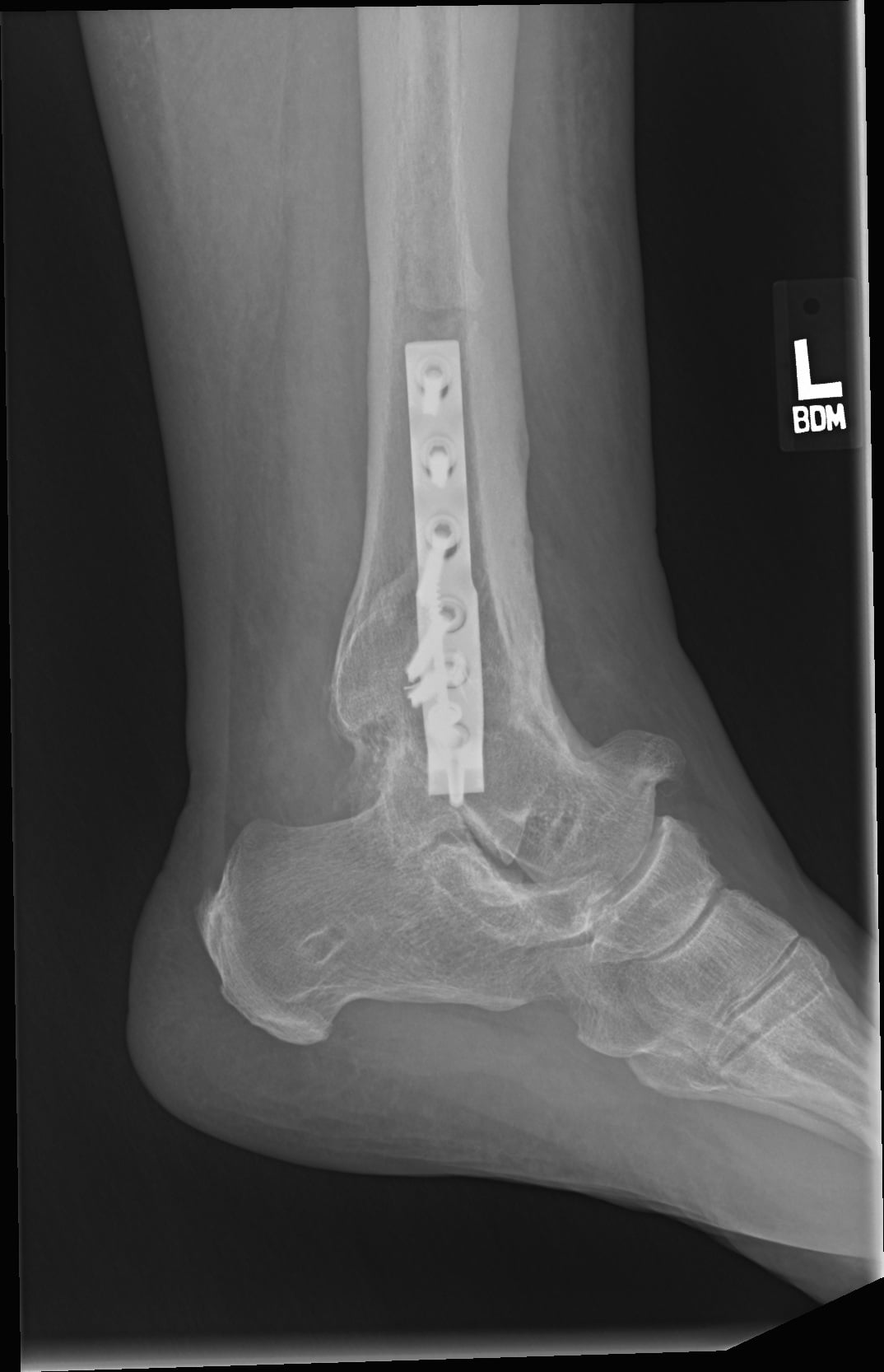
I came out of it on May 1, 1998 — walking, but not well. Out faster than expected. I had a metal rod in my left arm, a lower back fusion, and four six-inch screws holding my left foot together.
The Army medically discharged me.
RECOVERY — LEEANNA'S CALLS
After my wreck in 1998, I was giving up. I was sleeping all the time. I was hurting. I was tired. My sister Leeanna found out. She called me every day — three or four times a day — trying to get me back into computers, back onto mIRC, to talk with her. I finally agreed.
I struggled hard to remember everything. I asked for help from everyone on IRC. And by October 1998 — after my ankle fusion on September 18 — I was the one helping everyone else. It all came back.
She saved my recovery. Not the doctors, not the nurses — her. She wouldn't let me quit.
LEEANNA MARIE GLASCO (1974-2011)
My sister Leeanna was born September 11, 1974, and died June 5, 2011. She was 36 years old.
She worked security at the Tremont Music Hall in Charlotte. When Stabbing Westward came to town in 1999, she took me. She told me to bring my CDs — "for you, I am going." She went to their dressing room and told them the story. She told them how their music calmed me down in a medically induced coma. They asked if I remembered their music. She said yes — I recalled it from The Crow.
They said: "Go get his CDs. We'll sign them. Every time we're in town, come to us and we'll sign the new ones too."
"His story is amazing," they said. "We love it."
The original members signed my CDs.
My sister made that happen. That's how I remember her — the one who wouldn't let me quit, and the one who made the band sign my CDs.
ALEC
My son Alec was born March 15, 2006. He's autistic — high functioning.
He didn't walk until he was about three and a half. Combat crawled first, then crawled, then walked. At the time, we didn't know what we were looking at. It took the school to finally get it right with him — first grade, at Oak Ridge Elementary. That's when he was properly diagnosed.
He's super smart. He was doing things on a computer at a young age — like me. Computers came naturally to him. That's something we share. Now he's hooked on social media — that's his world.
His memory is unreal. He can quote every season of Golden Girls word for word. Same with Hazel and Maude.
When he was little, we used to go to the Lowe's Build and Grow workshops in Hickory, North Carolina. He'd build things. I'd make him swing that hammer at the concrete first — just to tap the nail in. Then he'd hit them home every time.
One day I told him: "One day you're going to hit my thumb." And he did — that next swing. I started laughing. He looked at me and said: "Daddy, I hurt you."
I said: "Boy, you did not hurt me. You did something great. You put some real effort in that swing. If you can do that every nail, we won't be here for an hour or two."
In 2011, we buried my sister Leeanna. Alec was 5. They were lowering her casket, and my dad was about to cry. Alec walked up, hugged him, told him he loved him, and just sat in his lap the whole time.
He held my dad together at his own daughter's funeral.
I used to show him basic stuff on the computer. One day he was over at the house after his parents split. I'd hidden some paperwork I was using to bypass a password for someone on a computer I was working on. He found it. I wasn't paying attention — and when I looked over, he was already at it.
He said: "I'm trying to hack the password like this paper says, so I can change the password on your account and make myself admin."
I said: "Oh no you do not — stop."
He stopped. Then I told him: "You're not doing what you did to your grandma."
Because he'd already done it to her. I'd warned her — I told her she couldn't let him watch her type the password in. She didn't believe me. She didn't listen. He made her a regular user and himself admin.
Then in 4th grade, his teacher pulled me aside after school. He'd lost his computer privileges again. I asked why. She said: "We don't know how he did it, but he got around the firewall and watched Golden Girls on YouTube."
I told her: "Get your password changed. Make sure he turns around. Have the assistant watch him — make sure he never sees you type the password. Problem solved."
The next year, a different teacher told me he was one character away from gaining access to her email account.
I asked: "Does he watch you type the password?" She said he was around, looking. I said: "You can't do that."
She looked at me like I was funny.
I said: "Look — he has my memory and his mom's memory."
And he does. When I was the Unit Armorer with 2/82 FA at Fort Hood, I knew the serial number to every weapon we had. All from memory.
His mom and I divorced on August 30, 2015. She walked out and took him with her. He was 9 when they left.
When my mom died in June 2022, Christina wouldn't let Alec come with us to bury his grandmother. He wasn't there. He didn't get to say goodbye.
In October 2023, she filed to have him declared incompetent. I knew she wasn't going to let me see him — even though she told the court she would. I was living three-quarters of a mile from him and couldn't see him.
So I left. I said: "I'm going home. I've always called Arkansas home."
I sold the house in North Carolina. On November 1, 2024, I moved to Arkansas.
But I didn't lose him. We still talk — a lot. He's 20 now. He lives with his mom, but he's still my son. And we're still close.
MY PARENTS — CATHERINE AND LORAN SR.
My mom was Catherine Ann Coker Glasco. She was born December 12, 1950, in Lorain, Ohio. She died June 18, 2022, in Hickory, North Carolina.
She was raised by her grandmother in West Helena, Arkansas, and by her dad and stepmom, Ruby Coker, after they married on December 7th.
From January 2011 until June 2022, she was in a hospital or nursing home on a ventilator. Eleven and a half years. She didn't get to go to her daughter's funeral. Leeanna died June 5, 2011 — five months after Mom went on the vent.
My dad went to see her every Monday, Wednesday, and Saturday that whole time. Every week. For eleven and a half years.
She was buried at Pine Log Cemetery in Brookland, Arkansas — with Ruby, and Harley, and Ethel, and the whole Masterson line.
My dad is Loran Gene Glasco Sr. He was born August 7, 1951. He turns 75 this year. He's the first Glasco man in generations to reach that age. He broke the pattern.
WESTERN CHEROKEE NATION
I am an enrolled member of the Western Cherokee Nation — Enrollment No. 57820. My blood quantum is 3/8.
My grandmother Ruby Masterson Glasco was full-blood Western Cherokee. My father, Loran Gene Glasco Sr., is also enrolled and is 3/4 Cherokee. The Cherokee line runs through the Masterson family — and also through the Chavis family.
I enrolled us both. Because this isn't just my heritage — it's his. And it needed to be documented.
THE FAMILY TREE
My family tree, traced through FamilySearch, connects me to over 78,000 people across 37,000 families. The direct line runs through the Glasco, Masterson, Coker, Davidson, McKinney, Gill, Durham, Beise, Dees, Heath, Green, and Chavis families.
The tree goes back over 900 years — into the 1200s. Along the way, it connects to:
Scottish nobility — the Sinclairs of Roslin (builders of Rosslyn Chapel), the MacKays (Highland clan chiefs), the Gordons (Earls of Huntly), the Hamiltons (Dukes of Hamilton), the Hepburns (Earls of Bothwell), and the Dunbars — including Lady Marjorie Dunbar, Countess of Crawford (1386).
English nobility — the Nevilles (Barons of Abergavenny), the Vernons (Lords of Haddon Hall), the Talbots (Earls of Shrewsbury), the Hastings (Earls of Pembroke), the Lovels (Barons Lovel), the Bagots (Staffordshire nobility), and the de Malbanks (Lords of Nantwich, Cheshire — the bridge between my English ancestry and the Masterson line).
Irish ancestry — Sir Richard Masterson of Ferns Castle, County Wexford (1545-1647), and the Gill family from Ireland.
German ancestry — the Beise family from Pomerania, Prussia; the Lader family from Lorraine, France; and the Lutz family from Bavaria.
Cherokee ancestry — through Ruby Masterson Glasco, and through the Chavis family (Aron Wesley Chavis, 1745-1810; Priscilla Elizabeth Chavis, ~1785-1876).
The deeper connections — the nobility, the royal lines — are documented in the FamilySearch tree, built by many contributors over many years. The direct line — my parents, grandparents, and great-grandparents — is solid.
MY WIVES
I've been married four times.
Kim — Kimberly Rodgers Feilds — was my first wife. We married in 1993, divorced in January 1997. She was the one who got away. And she knows it. I've been married three more times since, but I always said I'd never get back together with any of them — except Kim. She's been married to her third husband for 20 years now. I won't break that up. Not ever.
Karrey Parson was my second wife. We married March 6 and split in July — five months. She accused me of cheating, but it was her the whole time. I found other men's IDs in the car and driveway.
Christina Chaffee Glasco was my third wife. We met in October 2005, married July 6, 2006. She was pregnant with Alec, so I did the right thing. We had ten years together — some good, a lot of hell. She left August 30, 2015.
Hayley was my fourth wife. We married March 6, 2019, split December 23, 2019. The divorce wasn't final until May 29, 2021 — COVID delayed the paperwork.
I got a vasectomy on November 17, 2017. I was done.
COMING HOME — ARKANSAS
My mom died June 18, 2022, in Hickory, North Carolina. She was buried at Pine Log Cemetery in Brookland, Arkansas — with Ruby, and Harley, and Ethel, and the whole Masterson line.
My dad drove to Arkansas. I drove to Arkansas. Separate cars, same destination.
Then I went back to NC. There was a house to sell. A life to close out.
In October 2023, Christina filed to have Alec declared incompetent. I knew she wasn't going to let me see him. I was living three-quarters of a mile from him and couldn't see him. So I decided: I'm going home. I've always called Arkansas home.
I sold the house in North Carolina. On November 1, 2024, I moved to Arkansas for good.
I bought 40 acres in the Arkansas Ozarks. That's where I'm building the earth tube system — two 160-foot trenches, a 6x6 shared drainage vault, and everything that goes with it.
But it's more than just the build site. It's the land. It's where my grandfather died in 1972. It's near where my grandmother is buried at Pine Log Cemetery in Brookland. It's where the whole family has always come back to.
And now it's mine.
THE BUILD — 2026
I'm building a 50-to-80 year Subterranean Passive Geothermal Earth Tube Climate System on my 40 acres. The system will rely entirely on the passive thermal energy of the earth to pre-condition the fresh air entering my home — dropping summer intake air to a crisp 58–60°F, and pre-heating winter intake air up to 50°F before it reaches the heat pump.
The design rejects common DIY shortcuts. Two completely separate parallel trenches. A native earth barrier wall between them. Over 7 feet of pipe-to-pipe centerline isolation. A 6x6 shared drainage vault at the 160-foot mark. A 12-inch masonry sand cushion topper. A geotextile fabric shield. A subsurface drip irrigation loop.
Total material budget: $7,000. Every dollar goes into permanent, commercial-grade components engineered to industrial civil standards.
The whole build is documented live on Twitch (elggy_), YouTube (ELGGY72), Rumble, and Trovo.
FOLLOW THE BUILD
The full project — history, engineering, and funding — is documented online.
EARTH TUBE PROJECT → DONATE ON GOFUNDME →WHAT'S NEXT
I'm hoping for surgery in January — more bones to fuse in my left foot. But first, I want to hunt a whole deer season. I bought 40 acres out here. My grandfather died in these Arkansas woods in 1972. And I'm going to hunt them this year before I'm laid up again.
After the surgery, I heal. Then I finish the earth tube system. Then I see what's next.
CARRYING THE NAME FORWARD
Every time someone watches a stream, signs into a build update, or donates to the campaign, they're participating in something that started with a grandmother and a nickname. The tech is modern. The engineering is civil-grade. But the name on the door is old — older than me, older than the trademark, older than the clan records I found.
It's the name my grandma gave me. And it's the one I'm carrying forward.